What Hiring Managers Look for in New Grad Nurses
Find out what hiring managers look for in new grad nurses, from safe judgment to a willingness to learn, and how to show it in your resume and interview.
IRN
InsiderRN Team
Written for new grad nurses

You hit submit on an application and then... nothing. No feedback, no explanation, just a quiet inbox and a lot of guessing about what the other side is thinking. For most new grads, hiring feels like a black box, and that's a big part of why InsiderRN exists: to show new nurses how the real world of nursing actually works, including how hiring decisions get made long before you set foot on a unit.
This guide explains what hiring managers look for in new grad nurses, who is actually reading your application, and how those qualities show up in your resume and interview. It sticks to the "what and why," so you can start making smarter choices today without needing a nursing leadership degree to decode the process.
What Do Hiring Managers Want to See in a New Grad Nurse?
In short, they want a safe, teachable, and reliable co-worker who communicates clearly and seems likely to stay. Nobody expects a new grad nurse to arrive with years of experience. What managers hope to find is good judgment, honesty about what you don't know yet, and signs that you'll take coaching well. Clinical skills can be taught during orientation. Attitude is much harder to change, which is why it carries so much weight.
Who Is Actually Reading Your Application?
It helps to know who is in the room. According to Nurse Coach Caroline's guide to new grad interviews, a hiring team can include a nurse manager, a nurse residency program director, a recruiter, and sometimes a staff nurse or an educator. Each person is listening for something a little different.
Think of it this way: the recruiter checks that the basics are in order, the manager pictures you on the unit, and the educator or residency director wonders how you'll respond to teaching. You aren't trying to impress one person. You're trying to look like a safe, coachable choice to several people at once.

What Does the Hiring Process Usually Look Like?
The exact steps vary, but most new grad nurse hiring follows a familiar path. You submit an application, then the applicant tracking system (ATS) automatically reviews your application. Some hospitals and health systems use out-of-the-box artificial intelligence to automatically review your application. If your application makes it through the ATS, someone from human resources usually screens it, and the stronger candidates are invited to an interview. That interview might be a phone screen, a video you record on your own time, or a live conversation with the unit. Some hospitals add a second round or a unit visit before an offer goes out. Knowing the path ahead helps you prepare for each stage instead of being surprised by it.
The Five Qualities That Matter Most
Hiring managers use different words, but the same five ideas come up again and again.
Safety and sound judgment. Patient safety comes before everything else. A manager wants to see that you know the limits of your experience, ask for help early, and double check before you act. Saying "I'd confirm that with my preceptor first" is not a weak answer. Often it's exactly what they hoped to hear.
Clear communication. Nurses coordinate with physicians, therapists, families, and each other all day long. Managers pay attention to how you explain yourself in an interview because it previews how you'll give a report or raise a concern on a busy shift.
Teachability. New grads are hired to grow. Managers look for people who take feedback without getting defensive and who ask questions out of genuine curiosity instead of acting like they already know it all.
Reliability and professionalism. Replying to emails promptly, following the application instructions, and showing up prepared are all signals that you'll show up the same way for your shifts.
Fit and staying power. Training a new nurse costs a hospital time and money, so managers want someone who is truly interested in their unit and likely to stick around. A generic application sent to fifty places rarely sends that signal.
Nurse leaders quoted by AMN Healthcare echo much of this. They mention compassion, teamwork, accountability, communication, and a commitment to ongoing learning, and they encourage new graduates to be honest and to ask questions, as shared in AMN Healthcare's piece on what hiring managers seek in recent graduates.
The reason we take the hiring side so seriously is that one of our founders has lived it. Steph, PhD, MSN, RN, has spent more than 20 years in nursing across critical care, emergency, flight nursing, leadership, and education, and she has hired hundreds of nurses. Her co-founder Maddie is a new grad RN who is living the transition right now. You can meet both of them on our About page.
How Does a Hiring Manager Read Your Resume?
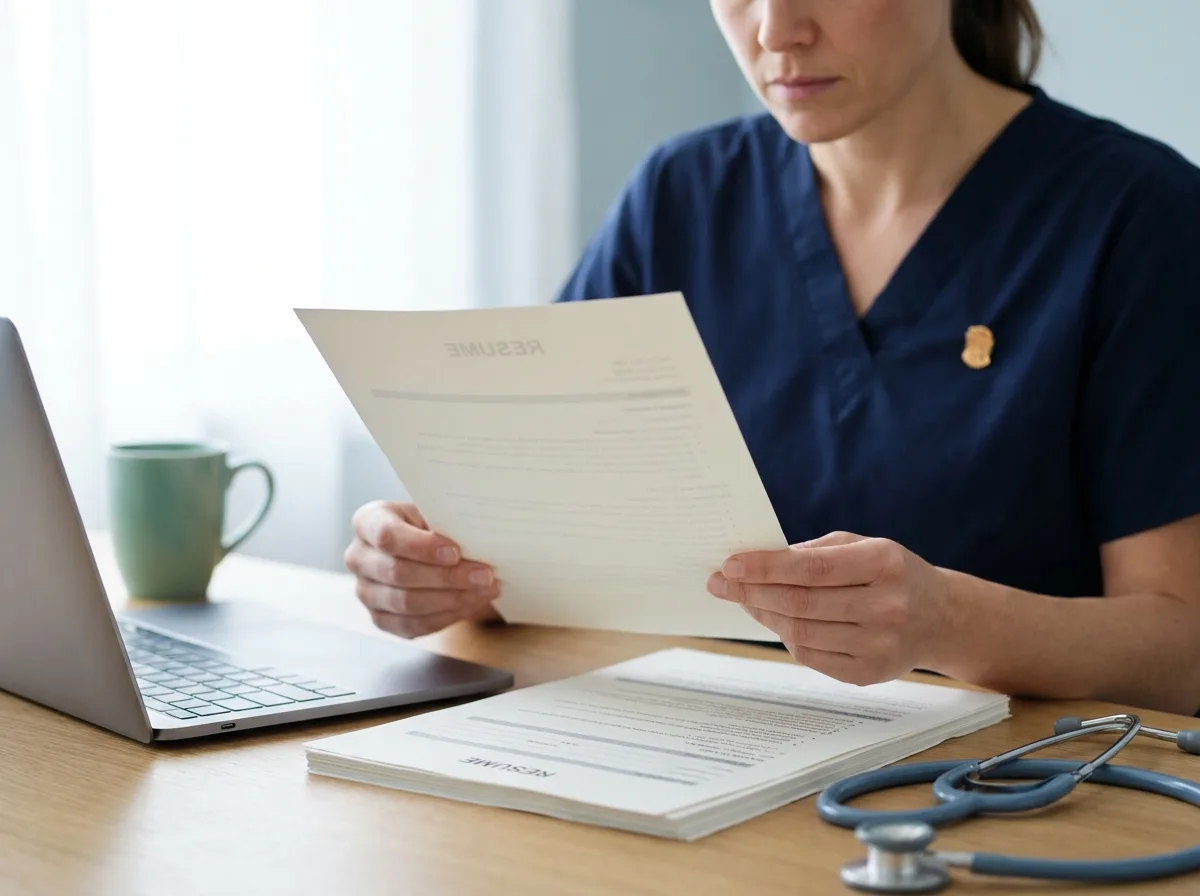
Managers often work through many applications in a single sitting, so a resume usually gets a quick first pass before anyone reads it closely. In that pass, they tend to look for your work experience, relevant certifications such as BLS, and any awards or volunteer history that shows responsibility. A tidy, honest, easy-to-scan page does more for you than fancy design. Typos and vague descriptions stand out, because they suggest the same carelessness could show up in documentation later.
What Do Nurse Managers Notice During the Interview?
Interviews are short, so managers read a lot into small moments. Three of them tend to stand out:
- How you describe a mistake or a hard moment from clinicals, and whether you take ownership of it
- How you respond when you don't fully know the answer to a question
- What you ask at the end of the interview, and whether it shows you've thought about the unit
None of these requires a perfect script. They reward honesty and a little preparation. A candidate who says "I wasn't sure, so I stopped and asked my instructor" usually leaves a better impression than someone who gives a polished answer with nothing real behind it.
Is It Okay to Admit What You Don't Know?
Yes, and it often helps you. Managers know a new grad can't and won't know everything, so they're more concerned about how you handle the gaps. Someone who says "that's an area I'm still building, and here's how I've been working on it" comes across as self-aware and coachable. Someone who bluffs through an answer raises a quiet worry about what they might do at the bedside when they're unsure. The goal isn't to sound flawless. It's to sound like someone who can be trusted to say "I need help" at the right moment.
What Do Hiring Managers Not Expect From New Grad Nurses?
Knowing what isn't expected can take a lot of pressure off of you. Managers don't expect you to be fast on your first day, to remember every procedure from school, or to already know their charting system. They know orientation exists for exactly those things. They also don't expect a perfect, polished interview. A few nervous pauses won't sink you, especially if your answers are thoughtful and honest.
What they do expect is effort and awareness. They want to see that you are prepared, that you understand the role of a new nurse in their unit, and that you'll speak up when something is unclear. If you walk in with that mindset, you're already ahead of many applicants who spend their energy trying to look like experienced nurses instead of promising new ones.
Why Do Some Qualified New Grads Still Not Get an Offer?
It's rarely about intelligence or grades. More often, small things add up. The application looks generic, with nothing to suggest the person wants this particular unit. Answers sound memorized, so the manager can't tell who is really behind them. The candidate speaks poorly about a former instructor or coworker, which makes a manager wonder how they'd talk about the team down the road. Or the interview ends with "no, I don't have any questions," which can read as low interest.
The good news is that every one of these is fixable, and fixing them doesn't require more experience. It requires knowing what the other side is looking for.
How Can You Stand Out With Little Experience?
Start by treating your clinical rotations as the real experience they are. Hiring managers know new grads haven't worked as RNs, so they look for evidence in what you do have. A few examples: a rotation where you noticed a patient change and spoke up, work as a CNA or patient care tech that shows you're comfortable on a busy floor, or a student leadership role that shows you can work on a team.
Each of those maps back to one of the five qualities above. Instead of saying "I'm a team player," describe one specific shift where you helped a coworker and what you took from it. A small, specific story beats a general claim every time. When you connect your stories to what a manager cares about, you stop sounding like a generic applicant and start sounding like a nurse who is ready to learn.
Knowing the qualities is the first half of the work. The harder half is turning them into real answers, a resume that reflects them, and questions you feel comfortable asking. That is the part InsiderRN's video training walks through step by step, with examples, inside our membership plans, for anyone who wants to go deeper than a blog post can.

Does the Unit You Apply To Change What They Look For?
A little, yes. The five qualities above hold everywhere, but the emphasis can shift. A busy emergency or critical care unit tends to value composure under pressure and a real appetite for learning complex care. A medical/surgical floor often values organization and time management, since you'll juggle several patients at once. A smaller community unit may care a lot about whether you'll fit the team and stay. Reading the job posting closely and thinking about what that unit's daily reality demands lets you tailor your examples without changing who you are.
A Simple Way to Prepare This Week
You don't need a big plan. A few small steps will do more than hours of vague worrying. First, choose three moments from your clinicals that show judgment, communication, or teamwork. Second, spend ten minutes learning about the specific unit and hospital you're applying to, so you can explain why it appeals to you. Third, write two or three questions you genuinely want answered, like what orientation looks like or how the unit supports new nurses. Finally, say your answers out loud once or twice. Hearing yourself helps you sound like a person instead of a script.
The Short Version
Understanding what hiring managers look for in new grad nurses won't guarantee an offer, but it takes much of the mystery out of the process. They are looking for safe judgment, clear communication, a willingness to learn, professionalism, and genuine interest in the unit. You can show every one of those with the experience you already have.
If you have an interview or an offer on the table and want help thinking it through, reach out through our contact page and we'll point you in the right direction.
Frequently Asked Questions
What do hiring managers want from new grad nurses?
They want someone who is safe, teachable, reliable, and a clear communicator, and who seems genuinely interested in the unit. Clinical skills matter, but managers know those grow during orientation, so attitude and judgment often carry more weight.
Do new grad nurses need experience to get hired?
No, not necessarily. Hiring managers expect new grads to be new. They look at your clinical rotations, any CNA or patient care work, volunteering, and student leadership as evidence of how you will perform.
How can a new grad nurse stand out in an interview?
Give specific examples from clinicals, be honest about what you're still learning, and ask thoughtful questions about the unit and orientation. Showing that you researched the unit sets you apart from applicants who sent the same application everywhere.
What mistakes cost new grads job offers?
Common ones include generic applications, memorized sounding answers, speaking negatively about past instructors or coworkers, and having no questions at the end of the interview. Each of these can suggest low interest or poor fit.
Who makes the hiring decision for new grad nurses?
It varies by hospital. A nurse manager is often central, and the team may also include a residency program director, a recruiter, and sometimes a staff nurse or educator who weighs in.
IRN
Written by the InsiderRN Team
Straight-talking career guidance for new grad nurses.
Ready to launch your nursing career?
InsiderRN gives new grad nurses the interview prep, resume tools, and first-year survival training nursing school never taught.