InterviewsOctober 9, 20269 min read
How to Pass a HireVue On-Demand Video Interview as a Nurse
Learn how to pass a HireVue nursing interview with tips on common questions, answer structure, setup, mistakes to avoid, and interview preparation.
IRN
InsiderRN Team
Written for new grad nurses

You apply for a nursing position, and a day or two later, an email lands in your inbox asking you to complete a video interview. No scheduled call, no recruiter on the line, just a link, a set of questions, and a webcam. For a lot of new grads, this is the first time they've ever had to answer interview questions completely alone, and it throws people off more than it should.
This is a HireVue interview, and hospitals across the country now use it as an early screening step before a candidate ever talks to a real person. It feels different from a normal interview, but it isn't actually harder. Once you understand how the format works and what's being evaluated, it becomes something you can prepare for like any other part of the hiring process. This guide breaks down what a HireVue on-demand video interview actually is, how it works from start to finish, and what you can do to give a strong, natural answer even when nobody's there to respond to it.
What Is a HireVue Interview?
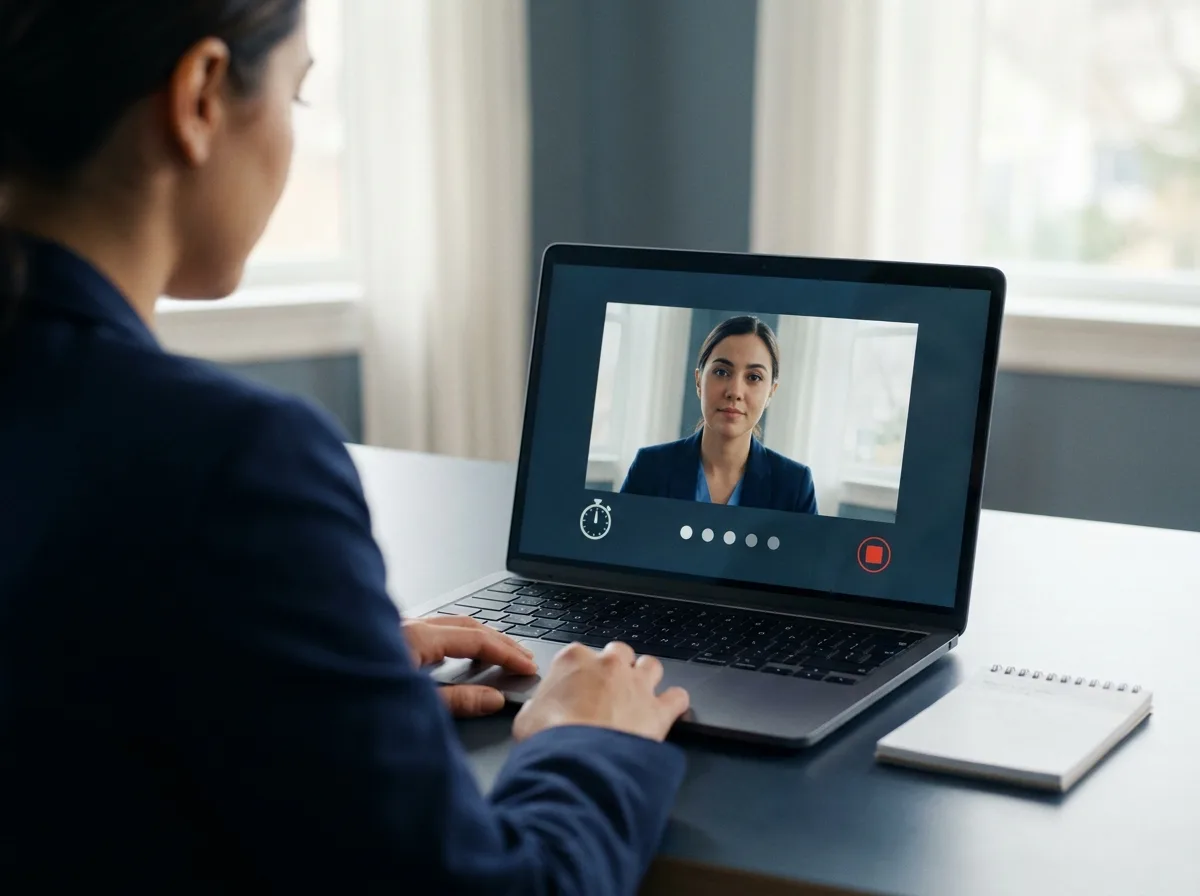
A HireVue interview is a type of pre-recorded, asynchronous video interview. Instead of talking live with a hiring manager, you're given a set of written or recorded questions on screen, a set amount of time to think, and a short recording window to answer each one. There's no interviewer reacting in real time, and there's no back-and-forth conversation, just you, the question, and the camera.
Most on-demand video assessments include somewhere between five and eight questions total, and you're typically given a short prep period before the timer starts recording your response. Some employers allow you to redo a question if you're unhappy with your first attempt, while others only allow one take, so it's worth reading the instructions in your invite carefully before you begin.
For nursing specifically, hospitals tend to use this format for entry-level and new grad nursing roles where they're screening a high volume of applicants before moving a smaller group forward to a live interview or an in-person meeting with the unit manager. If you're not sure what each stage of that process actually looks like, InsiderRN's interview prep resources break down what hospitals are screening for at every round, starting with this first video step.
How a HireVue On-Demand Interview Actually Works
Once you're invited, you'll get an email or text with a link to what's usually called an interview "foyer," basically a welcome page that gives you instructions, an estimated completion time, and sometimes a few practice questions before the real thing starts.
Here's the general flow most candidates go through:
- Click the link and log into the platform using the same email you applied with
- Complete a tech check to confirm your camera and microphone are working
- Use the practice questions (if offered) to get comfortable before your answers are actually recorded
- Answer each real question within the given time limit, then submit
Once you submit, your responses are uploaded and sent to the hiring team at the hospital you applied to. There's no live grading happening during the interview itself; someone on the other end reviews it afterward, on their own schedule, which is part of why this format can feel so quiet and strange compared to a normal conversation.
Why Hospitals Use This Format for New Grad Nurses
It's worth understanding why this step exists at all, because it changes how you should approach it. Hospitals aren't using video screens to catch people off guard. They're using them because new grad hiring often means reviewing hundreds of applicants for a limited number of residency spots, and a five-minute recorded response is a faster way to narrow that pool than scheduling individual phone calls with everyone who applied.
That means your video interview usually isn't the final decision-maker, it's a filter. The goal on your end isn't to be flawless. It's to clearly show that you can communicate, that you understand the basics of the role you're applying for, and that you're a serious candidate worth moving forward to the next round.
At InsiderRN, this is exactly the kind of context we try to give new grad nurses before they walk into any part of the hiring process, not just what to say, but why a hospital is asking it in the first place.
Getting Ready Before You Hit Record
A little bit of setup goes a long way here, and most of it has nothing to do with what you actually say.
Pick a quiet, well-lit room where you won't be interrupted, and test your device beforehand rather than discovering a broken microphone mid-interview. Natural light in front of you works better than a lamp behind you, since backlighting makes it hard for the viewer to actually see your face. If your platform offers practice questions, do them, even if it feels repetitive. It's the only chance you'll get to see how the recording and countdown actually feel before it counts.
Keep a short list of story ideas nearby, not a full script. You want brief notes on situations you can pull from, not lines you're going to read off a page, since reading always sounds like reading, even when you think it doesn't.
Dress the way you would for an in-person interview, even though you're sitting at home. It affects how you carry yourself on camera more than most people expect, and hiring managers do notice the difference between someone who treated it like a real interview and someone who treated it like a homework assignment.

How to Structure Your Answers
Because there's no interviewer to guide you, structure matters more here than it does in a live conversation. A simple way to keep your answers focused is to briefly set up the situation, explain the specific action you took, and end with the outcome or what you learned from it. You don't need to over-plan this, just make sure every answer has a clear beginning, middle, and end instead of trailing off or circling back to the same point twice.
Watch your time closely. Most platforms give you somewhere between 30 seconds and three minutes per question, and running out of time mid-sentence looks worse than giving a slightly shorter, complete answer. If you finish early, that's fine. A focused 90-second answer beats a rambling one that fills the whole clock.
One more thing worth remembering: current guidance from HireVue itself states that responses are evaluated on the overall context of what you say, not isolated keywords, so reciting buzzwords from the job posting won't save a weak answer. Speak like yourself, not like a job description.
Common HireVue Questions New Grad Nurses Are Asked
The specific questions vary by hospital, but most nursing-focused video interviews draw from a similar pool of themes: your motivation for choosing nursing, how you handle a difficult patient or family member, an example of working under pressure, how you communicate with a physician or team member, and your availability for shifts, weekends, or holidays.
A few themes worth preparing stories for in advance:
- A time you made a mistake or caught someone else's, and what you did next
- A moment you had to advocate for a patient
- How you prioritize tasks when several things need attention at once
If you want a longer list to practice against, sites like MockQuestions maintain a bank of nursing-specific HireVue questions with sample answer approaches, which can be a useful way to rehearse out loud before your actual interview.
Mistakes That Quietly Hurt Your Interview
A few habits show up again and again in weaker video interviews, and most of them are easy to fix once you know to look for them. Reading directly from notes is one of the most common. It's usually obvious to the person watching, even if it doesn't feel obvious to you while you're doing it. Rambling past the time limit is another, since an answer that gets cut off mid-thought reads as unprepared rather than passionate.
Looking at your own image on the screen instead of the camera lens is a smaller thing that still matters, because it creates the impression that you're not making eye contact with the viewer. And skipping the practice questions, when they're offered, means your first real answer is also the first time you've ever done this, which usually shows.
None of these mistakes are disqualifying on their own, but avoiding them puts you ahead of a large share of the candidate pool without changing anything about your actual qualifications.

What Happens After You Hit Submit
Once your interview is submitted, it's uploaded and made available to the hiring team, who review it on their own timeline rather than scoring it live. According to HireVue's own candidate FAQ page, assessments are evaluated on the full context of your response, and the platform does not use your recording for facial recognition or identity verification; it's purely reviewing what you say and how you say it.
Turnaround time varies a lot by hospital, so it's reasonable to follow up if you haven't heard anything after a week or two. If you move forward, the next step is usually a live interview, either over video or in person, which is where a slightly more conversational, less scripted version of the same story bank will serve you well.
Final Thoughts
A recorded interview will probably always feel a little less natural than talking to a real person, and that's fine. It's not meant to replace a real conversation, just to get you one step closer to it. Treat it like any other part of your job search: prepare a little, practice out loud, and show up as yourself instead of trying to perform a version of "perfect candidate."
If you're a new grad trying to figure out how to handle every stage of hiring, not just the video screen, that's a big part of what we built InsiderRN around: the parts of the process nursing school never actually teaches you.
You can read more about why we started building this kind of guidance for new nurses on our About page, and if you want structured interview practice and a question bank built specifically for nursing interviews, our interview prep resources walk you through it step by step. And if you've got a specific interview coming up and want a second set of eyes on how to prepare, feel free to get in touch with us directly. We're glad to help.
Frequently Asked Questions
What is a HireVue interview?
A HireVue interview is a pre-recorded, asynchronous video interview where candidates answer a set of questions on their own time by recording responses through a webcam, without a live interviewer present.
How long does a HireVue interview take to complete?
Most on-demand video interviews take somewhere between 15 and 30 minutes total, depending on how many questions are included and how much time is allotted per response.
Can I redo a HireVue interview question if I mess up?
It depends on the employer's settings. Some allow a retake for each question, while others only allow a single attempt, so check the instructions in your interview invite before you begin.
Does HireVue use facial recognition to evaluate candidates?
No. HireVue has stated publicly that it does not use facial recognition or track facial features to identify candidates, and assessments are evaluated based on the content of your spoken responses.
What should I wear to a HireVue nursing interview?
Dress the same way you would for an in-person interview: professional and polished, even though you're recording from home. It affects both how you come across on camera and how confident you feel while answering.
IRN
Written by the InsiderRN Team
Straight-talking career guidance for new grad nurses.
Ready to launch your nursing career?
InsiderRN gives new grad nurses the interview prep, resume tools, and first-year survival training nursing school never taught.