How to Prepare for the NCLEX: A Study Plan for Nursing Students
Learn how to prepare for the NCLEX-RN with a week-by-week study plan for nursing students, including how the exam works, NGN questions, and practice tips.
IRN
InsiderRN Team
Written for new grad nurses

The NCLEX has a way of making capable, hardworking nursing students feel like beginners again. You've made it through pharmacology, clinical rotations, and a mountain of care plans, and now a single exam stands between you and your license. InsiderRN was built for nursing students and new grads at exactly this crossroads, and we hear the same question again and again: where do I even start?
This guide explains how to prepare for the NCLEX, beginning with how the exam actually works and ending with a week-by-week study plan you can adjust to fit your own schedule. It's meant to give you a clear path, not one more thing to worry about.
The Short Answer (TL;DR)
Here is how to prepare for the NCLEX-RN: learn how the exam works, find your weak areas early, study by content area while doing practice questions every day, and review the reasoning behind every answer you get right or wrong. Then take full-length practice exams, and protect your sleep in the final week. Most students build a plan that runs several weeks, though the right length depends on how solid your foundation is and how much time you have.
How the NCLEX Actually Works
Knowing the format takes away a lot of the fear. The NCLEX is a computerized adaptive test, which means the difficulty of each question depends on how you answered the one before it. The National Council of State Boards of Nursing (NCSBN), which develops the exam, sets it so that RN candidates answer a minimum of 85 questions and a maximum of 150. The exam is delivered at Pearson VUE testing centers, and you have up to five hours, which includes the tutorial and any breaks you take.
A few details are worth understanding. Fifteen of the questions are unscored pretest items that are being tested for future exams, and you can't tell which ones they are, so treat every question seriously. There's also no set number of questions you need to get right. The computer stops the exam once it's confident about your result, which is why some candidates finish at 85 questions and others go to 150. A longer exam doesn't automatically mean you're failing.
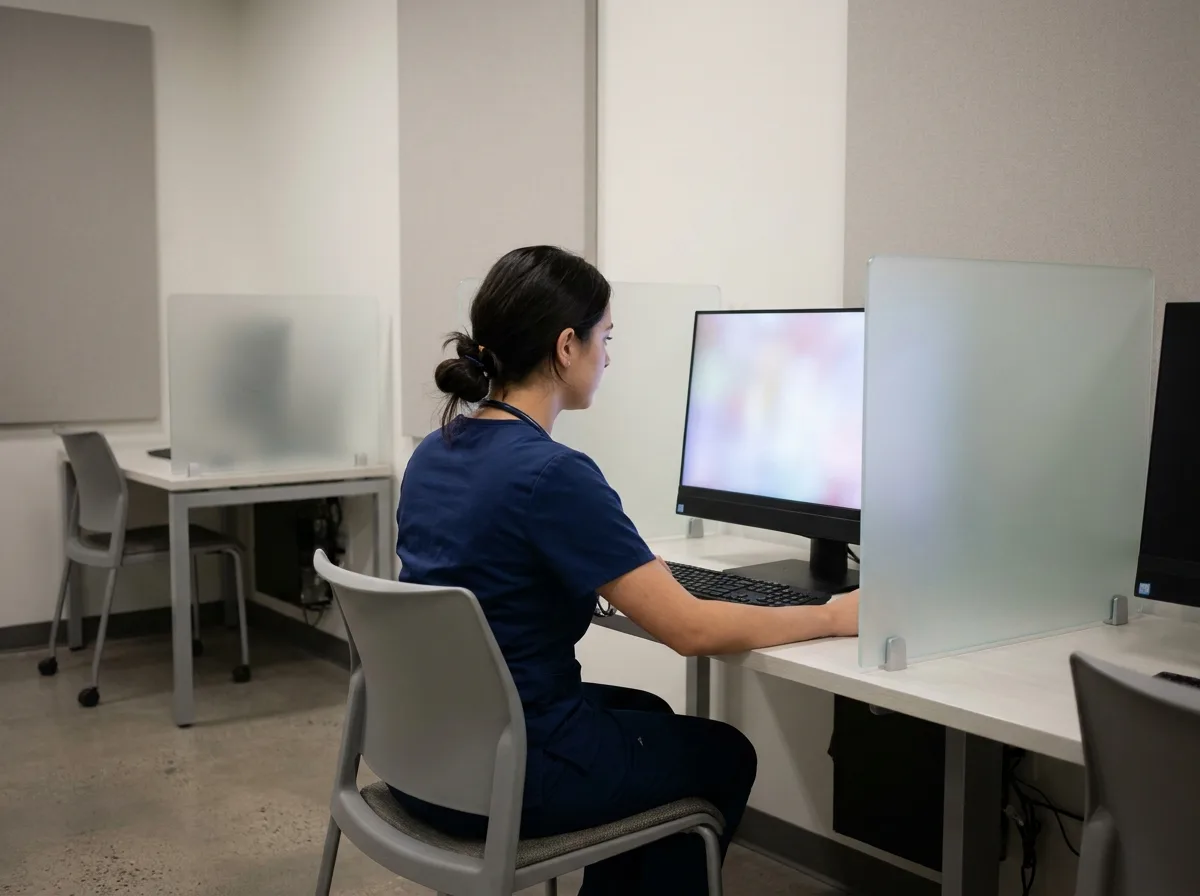
If you're still piecing together where this exam fits in the bigger licensing process, our guide on how to become a registered nurse covers every step, from choosing a program to your first job.
The Next Generation NCLEX
Today's exam includes what NCSBN calls the Next Generation NCLEX, or NGN. It adds clinical judgment case studies and new question formats on top of the traditional multiple choice items. A case study follows one patient through a scenario and asks you several linked questions, and many of the new formats give partial credit instead of all-or-nothing scoring.
The practical takeaway is that memorizing facts isn't enough. The exam asks you to notice what matters in a situation, decide what's most important, and act on it. When you study, practice that kind of thinking, not just recall.
What the Test Plan Covers
NCSBN publishes an NCLEX test plan that shows what's on the exam, and the current version took effect in April 2026. Content is organized into four client needs categories: safe and effective care environment, health promotion and maintenance, psychosocial integrity, and physiological integrity. Within those categories are smaller areas such as management of care, infection control, pharmacology, and reduction of risk potential.
Think of the test plan as your map. Instead of studying everything equally, use it to see where your time should go, and check it against your own weak spots.
Choosing Your Study Resources
It's tempting to buy every book, course, and app you hear about. Resist that. A solid NCLEX study plan usually relies on a small set of tools: the review materials from your program, one reliable question bank, and one source for content review that matches the way you learn. Using a few resources thoroughly beats skimming many.
Check how well any resource matches the current exam. Make sure it includes Next Generation case studies, and that its questions come with clear rationales. Your school's faculty and your classmates can also tell you what has worked for recent graduates.
Weeks 1 and 2: Find Your Starting Point
Begin with an honest diagnosis. Take a practice assessment early, even though it may not feel good, because the results show you where you stand. Sort your missed questions by category and look for patterns. Maybe pharmacology is shaky, or prioritization questions trip you up, or you tend to read too fast.
In these first two weeks, set up your routine too. Choose a regular study time, gather the resources you'll use, and decide on a small number of them rather than a pile. A simple, steady plan beats a perfect one you abandon in week three.
Weeks 3 to 5: Learn, Then Practice
This is the core of your preparation. For each content area, review the material that you find hardest, then practice questions on that topic right away. Reviewing and then applying keeps the knowledge from slipping away.
A weekly rhythm might look like the one below, and you should adjust it to your own life:
- Five days of focused content review, followed by practice questions on the same topics
- One day for a longer, mixed set of questions
- One day to rest completely
Whatever you choose, consistency matters most, and so does doing questions every day instead of only reading.

Staying Motivated in the Middle
Around the midpoint of any study plan, most students hit a slump. The material feels endless, practice scores bounce around, and the finish line seems far away. That's normal, and it helps to remember what the license is for. Beyond the exam waits a first job, a first unit, and a career you're building, and keeping that picture in mind can make a long evening of practice questions feel more worthwhile.
If you'd like a preview of what comes next, Set 01 inside InsiderRN, "Before the Badge," focuses on landing the right first job, and it's part of our membership plans for nursing students and new grad nurses who want guidance beyond what a blog post can offer.
Active Study Beats Rereading
If you're wondering how to study for the NCLEX without burning out, the biggest shift is moving from passive to active. Rereading notes feels productive, but it doesn't test whether you can use what you know. Answering questions, explaining a concept without looking at your notes, and drawing out a process from memory all force your brain to retrieve information, which is exactly what the exam asks.
Try ending each session with a few questions on what you just studied. If you miss one, that's useful information, not a failure. It tells you what to revisit tomorrow.
Weeks 6 and 7: Practice Exams and Pacing
Now shift toward full-length practice exams. Take timed practice exams that mix traditional questions and Next Generation case studies, so you build stamina for a long testing window. These sessions also help you find your pace. You want to reach the 85-question mark with time to spare, then keep going steadily in case your exam runs longer.
After every practice exam, spend more time reviewing than testing. Look at why the right answer is right and why each wrong option is wrong. Your goal isn't a certain score on a practice test. It's finding the gaps while you still have time to close them.
Week 8: Taper and Get Ready for Test Day
The final week is about keeping your knowledge fresh without burning out. A good last week usually looks like this:
- Lighter review that focuses on your most common mistakes
- No big new topics, since cramming adds stress without adding much
- A priority on sleep, regular meals, and some time away from studying
Handle the logistics early. Read your Pearson VUE confirmation carefully, check the identification and arrival requirements, and know how to get to the testing center. Removing small worries leaves more energy for the exam itself.

What If You Have Less Than Eight Weeks?
Not everyone has two months. If you have less time, keep the same structure but compress it. Skip any broad review of material you already know well, spend more time on your weakest categories, and practice questions daily from the start. If you're working while you study, aim for shorter, regular sessions over occasional marathon days. A realistic plan you can follow is worth more than an ambitious one you can't.
Many students also start job hunting while they study, which adds to the time pressure. If that's you, our new grad nursing resume guide explains how to say you're eligible for the NCLEX on your resume without overstating where you are in the process.
How to Use NCLEX Practice Questions Well
Practice questions are the heart of your plan, but how you use them matters more than how many you finish. There's no magic number of questions that guarantees a pass, so focus on quality.
After each question, read the rationale, even for the ones you got right, since sometimes you land on the correct answer for the wrong reason. Track your mistakes by category so patterns show up. And mix your question types, including NGN case studies, instead of relying only on single multiple choice items.
Three Habits That Make a Study Plan Stick
A few small habits help more than any single resource:
- Study in focused blocks with short breaks instead of long, tired marathons
- Keep a running list of concepts you keep missing and revisit it weekly
- Say your reasoning out loud, as if explaining to a patient or a classmate
None of these require special tools. They simply make your studying more active, which is what the exam rewards.
Mistakes That Quietly Cost Students
A few missteps are common. Cramming at the last minute leaves little time to absorb what you learn. Reading notes without doing questions can create a false sense of confidence. Ignoring Next Generation formats until the last week leaves you unprepared for how they work. Skipping timed practice makes the real exam feel longer and more stressful. And comparing your plan to a classmate's can shake your confidence, since people need different amounts of time. Prepare in the way that works for you.
Managing Test Day Nerves
Almost everyone feels nervous, and that's normal. Plan a calm morning, eat something, and get to the testing center early. During the exam, take your breaks if you need them and remember that you can't tell how you're doing from the questions you see. Each item feels hard because the exam adapts to challenge you. Focus on the question in front of you, then the next one.
After the Exam: Your Next Chapter
Passing the NCLEX is a huge milestone, but it's the end of school and not the end of the journey. The next decisions, like where to work and which unit to join, shape your first year more than most people expect.
Before you accept an offer, it helps to know what to look for, and our post on the signs of a toxic nursing unit can help you spot red flags early.
Walking In Ready
Learning how to prepare for the NCLEX comes down to a handful of habits:
- Understand the format
- Find your weak spots early
- Practice every day
- Review the reasoning behind your answers
- Rest before the exam
The study plan for nursing students above gives you a structure, but your own schedule and strengths should shape the details.
If you're partway through your preparation and want to talk about what comes next, or you've just passed and want help with your first steps as a nurse, reach out through our contact page and we'll point you in the right direction.
Frequently Asked Questions
How long should I study for the NCLEX?
There's no official requirement. Many students plan several weeks of focused study, but the right amount depends on your foundation, your weak areas, and how much time you can commit each week.
How many questions are on the NCLEX?
The exam has a minimum of 85 questions and a maximum of 150, with up to five hours to finish, including breaks. Fifteen of the questions are unscored pretest items.
What is the Next Generation NCLEX?
It's the updated version of the exam that adds clinical judgment case studies and new question formats, many of which award partial credit. It tests how you think through a patient situation, not only what you remember.
How many practice questions should I do?
There isn't a magic number. Aim to practice every day, review the rationale for each answer, and track your mistakes by category so you can focus on what actually needs work.
What happens if I don't pass the NCLEX?
You can retake it after a required waiting period. Retake rules can vary, so check the latest information from NCSBN and your state board of nursing, and use your results to adjust your study plan.
IRN
Written by the InsiderRN Team
Straight-talking career guidance for new grad nurses.
Ready to launch your nursing career?
InsiderRN gives new grad nurses the interview prep, resume tools, and first-year survival training nursing school never taught.